Crossout resources, crafting and the player market
There is no level-up screen that hands you parts. Everything in your garage arrived through one of two doors: you made it, or you bought it from another player. This is how both doors work.
How this page is paid for
solaten.online is an independent guide, and it is funded by advertising. Buttons and links marked partner link lead to the official Crossout website through an affiliate network. If you register there after following one, the publisher of this site may be paid a commission. You pay nothing extra, and the commission has no influence on what we write — see our editorial policy.
We are not the game's publisher. This site is not affiliated with, endorsed by or sponsored by Targem Games, Gaijin Entertainment or any related company.
The loop everything hangs off
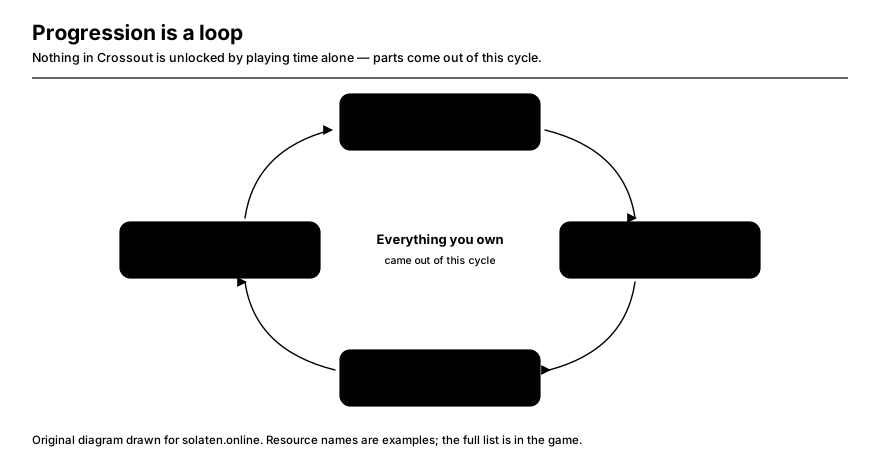
Battles — PvP and PvE alike — pay out resources. Raids are particularly resource-focused. Those resources are the input to everything else, and running out of them is the practical limit on how fast you progress.
Crafting: workbenches, factions and reputation
Parts are crafted at faction workbenches. Each faction owns a set of blueprints, and access to them is gated by your reputation with that faction, earned by playing. So crafting a specific part typically needs three things at once: the blueprint unlocked, the resources in hand, and enough standing with the faction that owns it.
The factions you meet early — Engineers, Scavengers, Steppenwolfs and others, with more introduced over time — each have a recognisable style, and picking one to commit to early is more efficient than spreading reputation thinly across all of them.
The market: prices set by other players
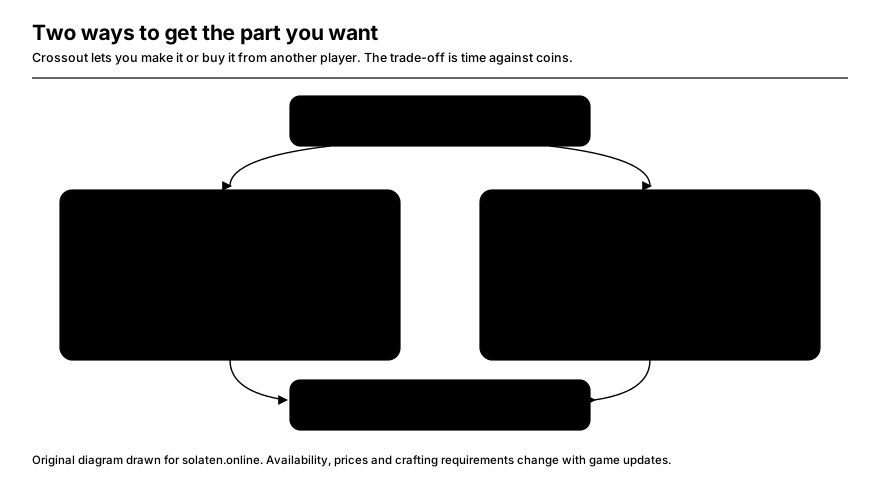
The in-game market lets players buy and sell parts and resources from each other for coins. Prices are not set by the developers; they move with supply and demand, which is why the same part can cost noticeably different amounts from one week to the next. Patch notes that change a weapon's balance move its price almost immediately.
Why this guide quotes no prices
Any number we printed here would be a snapshot of a moving market, and a stale snapshot is worse than none: it sets an expectation the game will not meet. Open the market in-game and look. That is not us dodging the question — it is the only accurate answer.
The rarity ladder and what it really costs
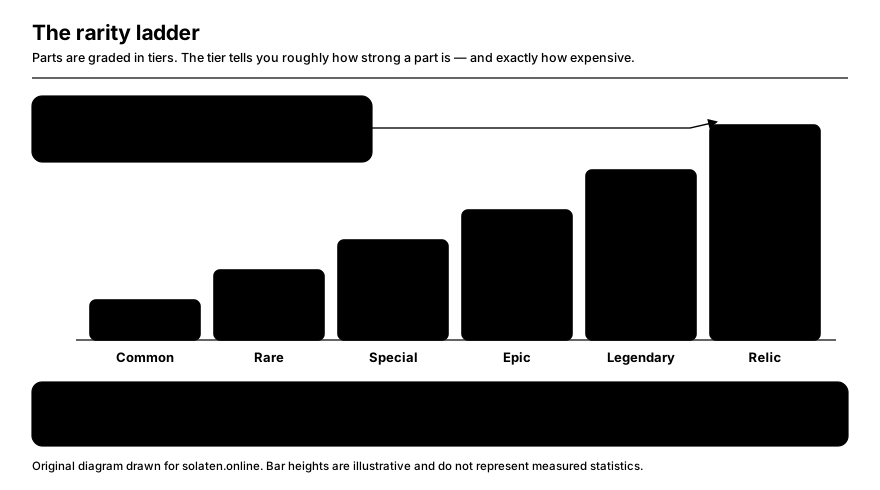
From the bottom: Common, Rare, Special, Epic, Legendary, Relic — with the pieces handed to you at the start of the game sitting below Common. Relic parts are the rarest, assembled from specific fragments and requiring uranium.
The gap between tiers in price is much wider than the gap in capability, and a higher tier also raises your power score. Together, those two facts mean the most expensive part you can afford is frequently the wrong purchase. Buy the part that completes a build, not the part that impresses.
The market is inside the game
Crafting, factions and the player market are all part of the free client. The link goes to the official Crossout website, where the game can be downloaded at no cost.
Go to the official sitePartner linkAdvertising. If you create an account through this link, the publisher of this site may earn a commission. It costs you nothing extra and it does not change what is written here.A reasonable first-month plan
- Play raids for resources rather than grinding PvP for coins.
PvE is the steadier income.
- Pick one faction and build reputation with it.
Depth beats breadth while you are poor.
- Craft before you buy.
Crafting costs time; the market costs coins you do not have yet.
- Check the market before every purchase.
Prices move. What was expensive last month may not be.
- Stay in a bracket you enjoy.
Every purchase that raises your power score changes the matches you get, not just the vehicle you drive.
Written by Margaret Cook, responsible editor for solaten.online, published by DKA tours, s.r.o.. Published 25 September 2026. Where this page and the game's publisher disagree, the publisher's own information prevails. Corrections: info@solaten.online.